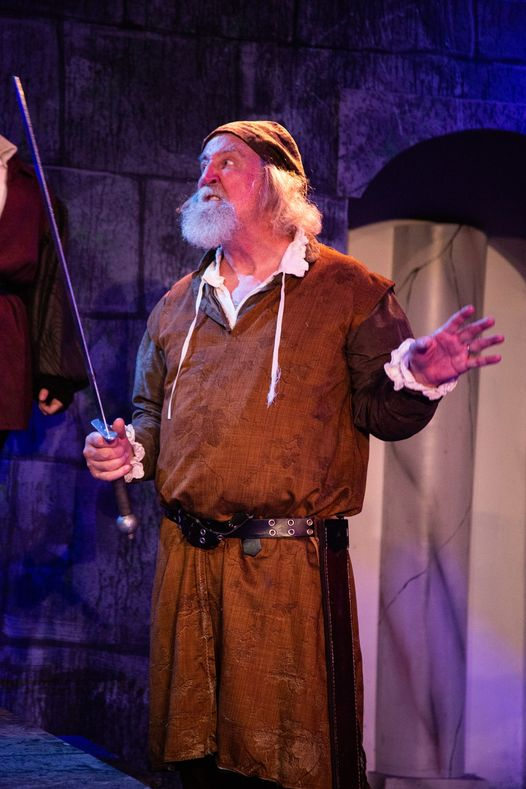
I could feel the rascal in my body.
That’s the only way I know how to describe it. The first time I played Sir John Falstaff — in a radio production of Hal and Falstaff — something settled into me that felt less like acting and more like recognition. I felt the girth and the weight. I felt the entitlement. I leaned into the microphone like an aging Orson Welles — cheeky, confident, calculating — and the speed of his quips came naturally, as if I’d always known how to think that way.
Maybe because, in some ways, I have.
I’ve lived enough of Falstaff’s lifestyle to know how he thinks and the tricks he uses. We come from different cultures and centuries, but the territory is familiar. Fortunately, I’ve been able to change the mistakes of my youth. Falstaff never did. That’s part of what makes him so fascinating — and so useful to an actor who’s done a little living.
Falstaff is a knight fallen into disrepair. He holds court among drunks, rascals, and the working women of the tavern not because he belongs there, but because his wit and storytelling skill make him indispensable wherever he lands. He is a coward who insists on his own bravery. A borrower who charms his way out of repayment. A man who sometimes believes his own propaganda — and that’s when things get truly interesting.
He is Bacchus incarnate. He is every charming rogue you’ve ever known. And he is, as any actor will tell you, an absolute dream to play.
I prepared his speech from Henry IV as an audition piece long before the radio productions:
“Why, thou owest God a death… What need I be so forward with him that calls not on me? Well, ’tis no matter; honour pricks me on.”
Falstaff’s meditation on honor is one of Shakespeare’s greatest comic monologues — and one of his most honest. He argues, with complete sincerity, that honor is an abstraction that does the dead no good whatsoever. It’s sophistry. It’s cowardice dressed up as philosophy. And it is absolutely, perfectly him.
I reveled in feeling like the cleverest person in the room. I was confident I could cajole money or affection from anyone within range. I had no doubt in my ability to charm, seduce, and wiggle out of any responsibility that might present itself.
I was a knight, you see.
But here’s what the radio show couldn’t give me — and why I want another crack at this role.
Radio is intimate. It lives in the voice. But Falstaff needs a body.
He needs a stage — a full canvas to express his grandiosity. He needs a tavern to inhabit, the way the characters in Long Day’s Journey into Night inhabit their living room — as both refuge and trap. The alcohol, the warmth, the protection of indoor misrule — these allow for staggering, laughter, bawdiness, loud proclamations, and personal grudges that daylight and public view would never permit.
I love voice work. But full staging allows the body to inform the core of the character. And with Falstaff, there are subtle distinctions in movement and expression that I haven’t discovered yet.
That’s the honest reason I want one more crack at the Fat Knight.
I’m not done with him. And I suspect he’s not done with me.
Have you seen a great Falstaff performance — on stage, screen, or radio? I’d love to hear about it in the comments.