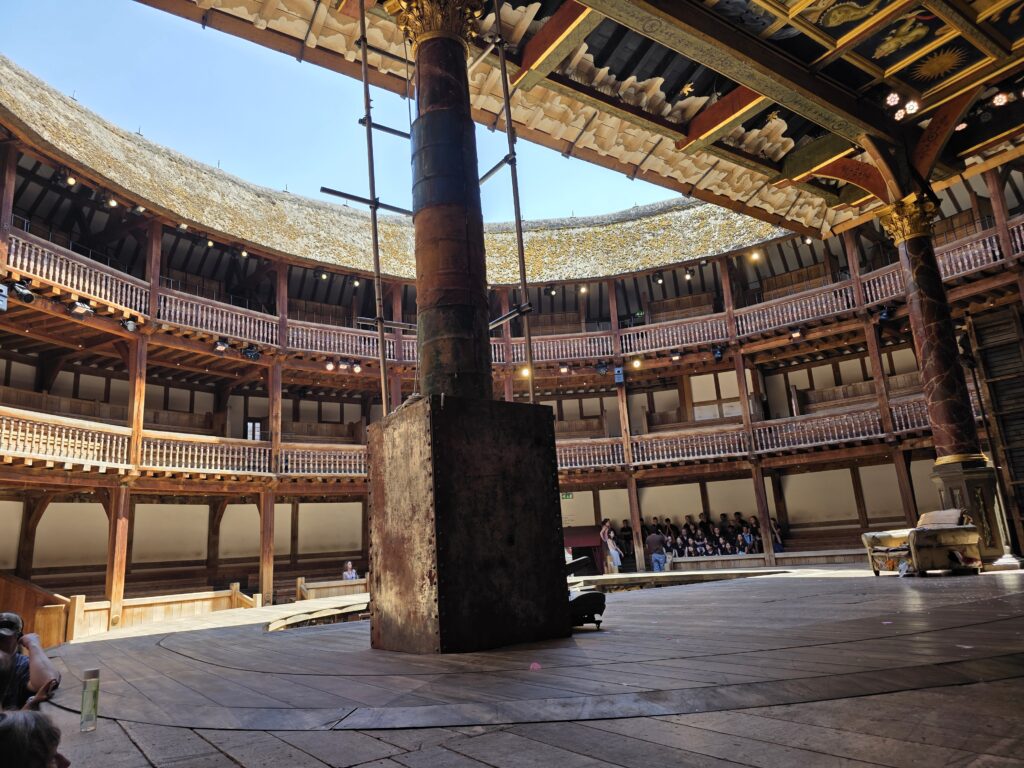
We had survived the tube crisis. We had found the Globe. We had taken the tour, walked the museum, tried on costumes, and stood where the Groundlings stand. By any measure, it had already been a remarkable day.
We were not prepared for what happened next.
As we finished the museum section and headed toward the lobby, we stopped to thank the two women at the information desk. They had been warm and welcoming when we arrived sweating and twenty minutes late. I wanted them to know it had mattered.
“We’ll see you tonight,” I said. “We’re coming back to see A Midsummer Night’s Dream.”
The two women exchanged a quick glance. Then one of them leapt out of her seat and came after us.
We stopped.
She leaned in and spoke quietly. “It hasn’t been officially released to the media yet, but the decision has been made to cancel tonight’s performance. I’m so sorry. I didn’t want you to come all the way back here to find out.”
My wife and I stood there. Letting the words sink in.
We had flown to London specifically to see this performance. After four days in Northern Ireland for the McGrath Clan International Reunion, we had crossed to London with two goals: tour the Globe, and see A Midsummer Night’s Dream performed on that stage. We had accomplished the first. The second was gone.
Whether or not we sighed out loud, we certainly felt deflated.
Looking back, there had been a clue we hadn’t recognized. Earlier, between the tour and the museum, we had visited the gift shop. As we shopped and looked around for about five minutes, we noticed that the entrance to the shop was being cordoned off with stanchions and red woven tape. We were told the registers had stopped working and to come back later. At the time it seemed like a minor inconvenience. In retrospect, it was a sign that something larger was unraveling behind the scenes.
The heat had been building all day. We had felt it ourselves, on the tube platforms, on the walk to the Globe, standing in the open yard where the Groundlings stand. Record temperatures were causing malfunctions across the entire transit system. Ten tube lines were shut down. The city was struggling.
And then there was the irony that was impossible to ignore.
A Midsummer Night’s Dream. Canceled. Because of a midsummer heatwave.
Shakespeare would have appreciated the joke. We appreciated it too… eventually.
As an actor who has performed on outdoor stages in warm weather, I understood the decision immediately and completely. I have stood on the main stage at the Renaissance Pleasure Faire on hot spring days, heat radiating up through wooden planks, in full Elizabethan costume. I have felt what that does to a body over the course of a performance. The actors in the Globe’s Midsummer production were wearing elaborate, less breathable costumes than anything I have managed. And they would have been performing for an audience packed into an open yard with limited shade, many of whom had already endured a chaotic and exhausting journey just to get there.
Nobody likes to cancel a show. I have been part of productions that lost performances to last-minute illness and failed Covid tests. It is hard to get the word out. Ticketholders still show up. The support staff gears up and then stands down. A cancellation touches everyone involved, from the leads to the crew to the box office staff. The Globe’s season runs considerably longer than our typical four-weekend runs at the Long Beach Shakespeare Company, but the feeling is the same regardless of scale. Performance days dominate your whole day. When a cancellation comes, it lands hard.
There was a rehearsal happening at the Globe the day we visited. I imagine the experience of working in that heat, in that space, on that day, also informed the decision. The people who made the call knew what they were protecting.
We counted our blessings. We had made it to the tour. We had seen the stage. We had stood in the Groundlings pit and felt something we will not forget. And thanks to the kindness of one woman at an information desk, who chose to tell us something before she was supposed to, we were spared the journey back only to find locked doors.
We crossed back over the bridge, took in a few more landmarks, and checked the tube status. By some kind of Midsummer magic, our line had reopened while ten others remained closed.
We walked slowly to the station. As we did, it occurred to us that a significant portion of that evening’s audience had no idea yet. They were still making their way across a city in crisis, toward a performance that would not happen.
We felt for them. We also felt grateful.
Sometimes Shakespeare finds a way to remind you that the best-laid plans are just the beginning of the story.
Have you ever had a performance canceled, or missed a show you had been looking forward to? I’d love to hear about it in the comments.